

The number nobody decks
Every AI programme has three numbers. Only the first one makes it onto the slide. What the evidence says about all three, and how to build the business case on the one that reaches the income statement.
Read the insight →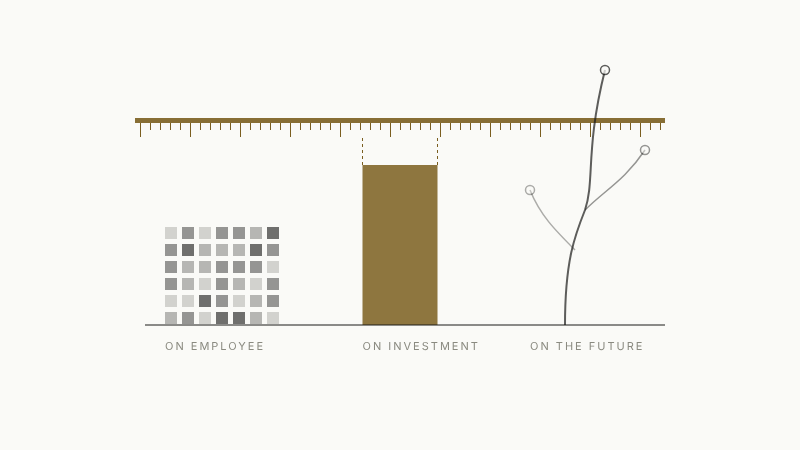
Three returns, one ruler
AI value arrives as a return on employees, on investment and on the future. Most programmes judge all three on payback. Includes a five question diagnostic.
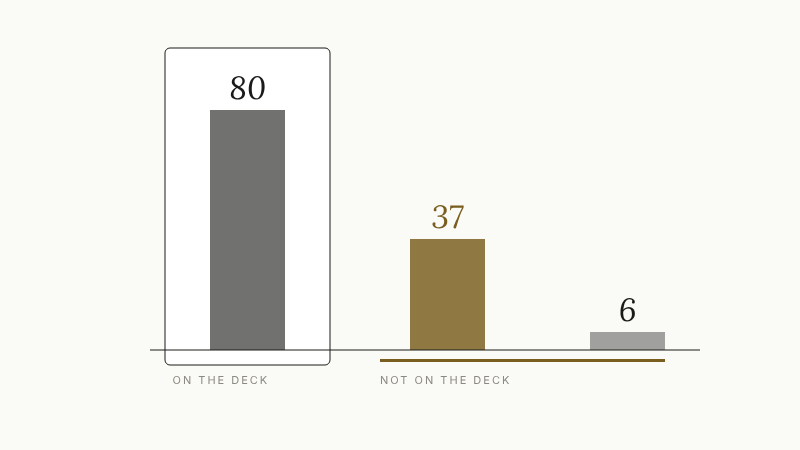
The number nobody decks
Three levels of AI return, three proof numbers. Why the deck shows only the first, and how to build the case on the one that reaches the P&L.
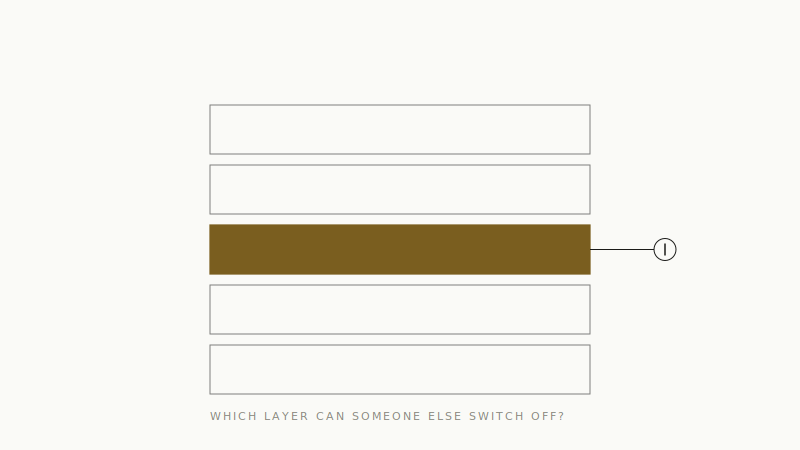
The Case for Sovereignty
Sovereign AI no longer needs a business case; the new world order made it. What it actually means, layer by layer, and why it is a delivery problem.
Each month one pillar leads with a focus insight.
- SeptemberThe Case for SovereigntyMacro & SovereignPublished
- OctoberThe number nobody decksReturn on InvestmentPublished
- NovemberAdoption is the deliverableClient SuccessComing
Organised by the three questions we keep answering in the field. Linked titles are published; plain text is on its way.
Macro & Sovereign
The macro boundaryThe limits an AI strategy has to fit inside: jurisdiction, compute and data.
Every use case sits on layers that someone else may control. The question is whose law can compel access to your data, and which layers you cannot afford to let anyone else switch off. Strategy sets that boundary before use cases are chosen, not after.
See it in practiceThe Case for SovereigntySovereign Stack
Compute, model & data-residency sovereignty
- The Case for Sovereignty
- Is sovereignty a moat or a tax?
- The frontier you can't access
Future of AI
Frontier shifts, read through a delivery lens
- Agents, demoed and deployed
- The capability curve is not the adoption curve
Proposed topics 1
Topics we are working up. Not yet scheduled.
- Geopolitics of ComputeWhere your model was allowed to be trained
Return on Investment
Where AI actually pays backWhere AI pays back, function by function, and how each case is measured.
A strategy has to say what each initiative returns and when, or it cannot be funded or defended. This pillar separates returns that are proven from returns that are only claimed, so money follows evidence and each case is measured on its own terms.
See it in practiceThe $9 Trillion SignalThe Three Levels of ROI
Quick wins → differentiation → transformation
ROI by Function
The honest maturity map, per business function
- The $9 Trillion Signal
- Support 8×, software 3×, HR unproven
Proposed topics 1
Topics we are working up. Not yet scheduled.
- The Business CaseThe number the CFO recognises
Client Success
Pilot to production, and beyondMoving from pilot to production in a regulated enterprise, and keeping it there.
A strategy is only as good as its delivery. In The $9 Trillion Signal, Forrester and Anaconda 2026 data put the share of enterprise agent pilots that never reach production at 88%, with governance friction among the causes. The adoption framework sets a named owner, success metrics and a timeline before the programme starts, not after the first sprint review.
See it in practiceProductivity from week one, advantage by designAI Adoption & Methodology
How programmes actually reach production
- Productivity from week one, advantage by design
- The three beliefs that stall bank AI
- Adoption is the deliverable
Regulation & Compliance
FINMA, EU AI Act & nDSG as delivery constraints
- Compliance from sprint one
- nDSG, and the cost of "later"
Proposed topics 4
Topics we are working up. Not yet scheduled.
- AI-Powered Software Development & SDLCThe SDLC is the first thing AI changes
- Governance & Model RiskWhen the model is wrong, who answers?
- Build, Buy & TechnologyThe model you can run beats the one you rent
- Architecture & Cost-BenefitArchitecture is a cost decision
New insights appear on LinkedIn first. Follow Auron Advisory ↗